

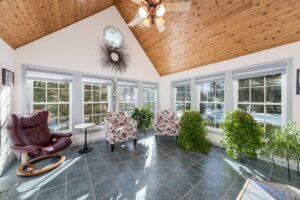
Southern California homes are known for distinctive architecture. From mid-century modern properties with flat roofs to dramatic cathedral ceilings with exposed beams, these designs create beautiful interiors—but they can also complicate insulation.
When insulation is limited by tight roof cavities or unusual framing, comfort and efficiency often suffer. At Progressive Insulation & Windows, we’ve been solving these challenges since 1978, helping homeowners upgrade insulation even in the most architecturally complex spaces.
Why Flat Roofs Create Insulation Constraints
Flat roofs typically offer far less attic space than traditional pitched roofs. In many cases, there is little to no accessible cavity above the ceiling. That means:
- Minimal room for high R-value insulation
- Limited ventilation pathways
- Greater exposure to direct solar heat
In hot Southern California summers, flat roofs absorb and transfer significant heat into the living space below. Without adequate insulation, interior temperatures can spike quickly, forcing HVAC systems to work harder.
An insulation retrofit in a flat-roof home requires careful product selection. The goal is to maximize thermal resistance within the limited space available while maintaining proper airflow and moisture control.
Cathedral Ceilings: Beauty with a Tradeoff
Cathedral ceilings create openness and visual appeal. However, they often eliminate traditional attic space entirely. Insulation must fit within narrow rafter cavities, leaving little margin for error.
Common issues we see include:
- Insufficient insulation depth
- Gaps between batts and framing
- Settled or compressed materials
- Poor air sealing around penetrations
Because heat rises, any deficiency in ceiling insulation becomes especially noticeable. Homeowners may experience uneven temperatures, hot upper levels, or increased cooling costs.
Why Older Installations Fall Short
Many architecturally unique homes were built decades ago, before modern energy codes were in place. Insulation levels that were once considered acceptable now fall well below current standards.
In older properties, we frequently find:
- Outdated fiberglass batts with low R-values
- Insulation that has shifted or deteriorated
- Evidence of air leakage around lighting fixtures and vents
Bringing these homes closer to modern performance standards requires more than simply adding material. It requires a comprehensive evaluation.
Customized Solutions for Complex Structures
At Progressive Insulation & Windows, we begin by assessing the structure to determine:
- Available cavity depth
- Existing insulation condition
- Ventilation pathways
- Air leakage points
We stock cotton cellulose and fiberglass insulation options suitable for tight cavities, attics, walls, ceilings, and subfloors. In limited spaces, dense-pack solutions may offer better performance than traditional batts.
Precision installation is critical. Insulation must be evenly distributed, free of voids, and properly sealed to prevent air movement. Even small gaps can significantly reduce effectiveness.
Energy Efficiency and Comfort Benefits
When flat roofs and cathedral ceilings are properly insulated, homeowners often notice immediate improvements:
- More stable indoor temperatures
- Reduced HVAC strain
- Lower monthly utility bills
- Improved overall comfort
Because ceiling insulation plays such a significant role in thermal performance, upgrading these areas can deliver outsized results compared to other improvements.
Experience Matters in Specialty Applications
Architectural uniqueness requires installation expertise. As a licensed contractor with decades of experience insulating more than 10,000 properties, Progressive Insulation & Windows understands how to approach specialty structures without compromising design or structural integrity.
If your home features a flat roof or cathedral ceilings and struggles with temperature control, it may be time to evaluate your insulation. Contact Progressive Insulation & Windows at (800) 500-6200 to schedule a free estimate and discover how the right retrofit strategy can protect both your comfort and your energy efficiency for years to come.